When a brand takes shape: from identity to structure
In a market saturated with images, colours and messages, what sets a strong brand apart from a weak one is not aesthetics. It is structural consistency.
Building a brand identity does not simply mean choosing a colour palette and designing a logo. It means defining a language that works in every context, on every medium, and in every interaction between the company and its audience.
This article explores why identity must be designed as a system and what happens when it is not.
From aesthetics to structure: a paradigm shift
For years, brand identity has been treated as a matter of style. A recognisable logo, a consistent colour palette, a well-organised style guide. Necessary elements, certainly, but insufficient. The problem arises when that identity needs to be applied in different contexts: a website, a social media campaign, a trade fair stand, packaging, a corporate video. If the identity has been conceived as aesthetics rather than a system, every new application becomes a negotiation: how far can we stray from the manual? What works here? The result is a brand that fragments. It doesn’t lose its logo, but it loses its voice. It doesn’t change colour, but it changes personality.
The five pillars of a systemic identity
1. Visual hierarchy A clear visual hierarchy determines what the audience sees first, what they see next, and what they remember. This structure isn’t just about the graphic layout: it’s about how the brand organises information, priorities and messages. A brand without a defined visual hierarchy is a brand that asks too much of its audience: you decide what is important
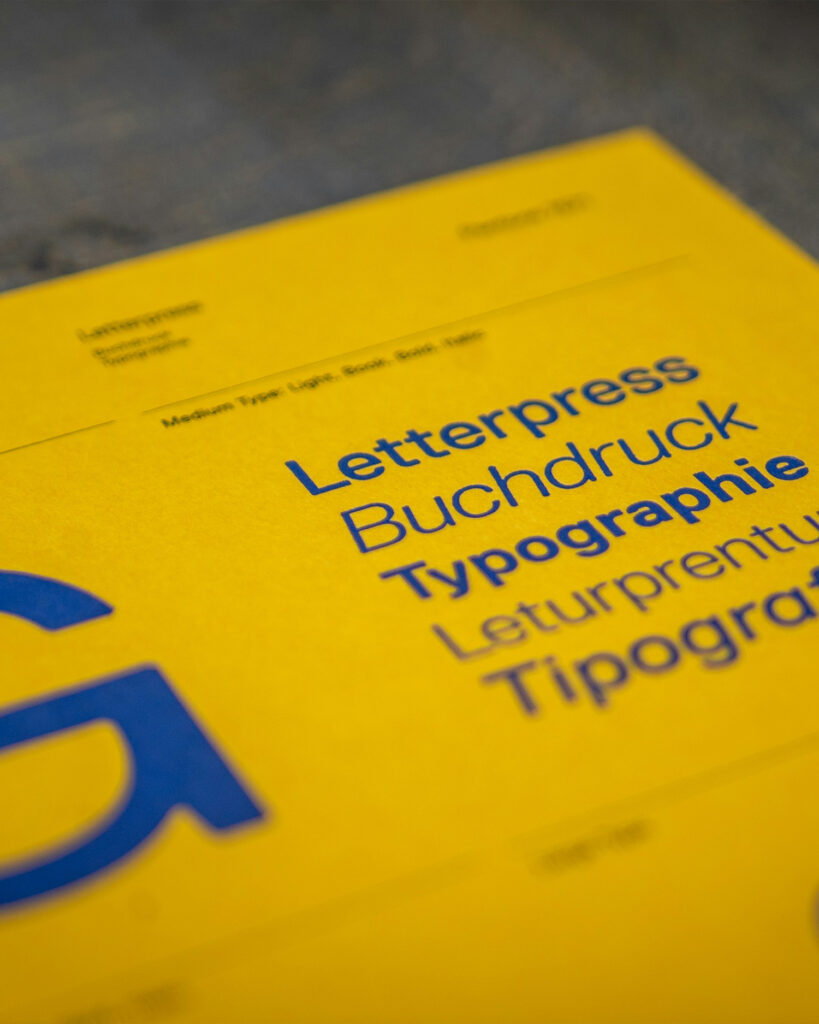
2. Typography as identity The choice of typeface is one of the most identity-defining decisions a brand can make. A serif typeface evokes history, authority and tradition. A geometric sans-serif conveys modernity and rigour. A display font creates an instantly recognisable personality. But typography is also a system in its application: headings, subheadings, body copy, captions, buttons. Every hierarchical level has a rule. That rule applies always, everywhere.
3. Tone of voice A brand’s tone of voice is the most underrated and most powerful element of its identity. How does the brand speak? Formally or informally? In a technical or accessible way? Authoritatively or empathetically? Directly or narratively? Tone of voice isn’t just for copywriters. It’s for those who reply to emails, those who write social media captions, and those who create corporate slides. It is the brand’s personality translated into words.
4. Usage guidelines An identity system only works if its rules are clear, documented and accessible. It is not enough to know how the brand looks today: you need to know how it behaves in every possible scenario. Brand guidelines are not a constraint on creativity. They are the infrastructure that enables consistency at scale.
5. Digital-physical alignment In today’s world, a brand exists simultaneously on a screen and in physical space. The website and the showroom. The newsletter and the trade fair stand. The social media profile and the flagship store. If these worlds speak different languages, the brand loses gravitas. If they speak the same language, every touchpoint reinforces the others.
What happens when identity isn’t a system
The consequences of a non-systemic brand identity are almost always invisible in the short term. The business runs smoothly, the logo is recognisable, and output is being produced.
The damage becomes apparent over time, in the gradual loss of consistency, in the inability to scale up without fragmenting, and in the difficulty of expanding into new markets or formats whilst maintaining recognisability.
A non-systemic brand is a brand that has to start from scratch every time. Every new project is a reconstruction, not an application.
The development process
Building a systemic identity requires a methodical approach that begins with a fundamental question: who are we, how do we want to be perceived, and in which contexts must we be recognisable? From this, a four-stage process unfolds:
Audit of the existing identity and analysis of current touchpoints
Definition of brand positioning and personality
System design: visual, verbal, spatial
Documentation of guidelines and stakeholder training
This process is not a purely creative exercise. It is a strategic investment that yields measurable returns: greater recognition, reduced production times for materials, and consistency in the perceived experience.
A systemic brand can evolve, expand and adapt; without losing its essence. Structure is not a constraint. It is what makes freedom possible.
If you are rethinking your identity or planning a new phase of growth, we can help you build a system, not just an image.